ADVOCATING FOR THE SAFETY OF CHILDREN WORLDWIDE
RESEARCHING THE DANGERS TO ENSURE THE SAFETY
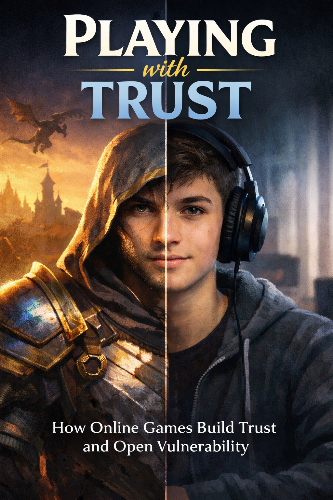
PLAYING WITH TRUST
How Online Games Build Trust and Open Vulnerability
Book Summary
Online games are no longer just entertainment. They are social worlds where friendships form, trust develops, and relationships can carry real emotional weight—especially for young people.
Playing with Trust explores how trust is built in online gaming environments, and why those same trust-building processes can quietly open vulnerability over time. Rather than focusing on extreme cases or fear-based warnings, this book explains the mechanisms through which trust forms naturally: cooperation, shared goals, long hours of interaction, group belonging, and carefully curated online identities.
By tracing the evolution of online interaction—from early chatrooms to modern multiplayer games—the book shows how gaming takes familiar social processes and intensifies them. Players do not just talk; they act together, rely on one another, and build shared history. Trust feels earned, reasonable, and safe—often long before it is consciously examined.
The book explains why online masking is easier than in-person, how avatars and in-game roles shape perception, and why consistency over time can become a false signal of safety. It also explores common trust pathways that create vulnerability, not through recklessness, but through normal human responses to care, familiarity, and belonging.
Importantly, Playing with Trust is not about discouraging online gaming or promoting suspicion. It is about awareness. It teaches young people how to think clearly about trust, how to maintain boundaries without guilt, and how to recognise influence without fear. For parents and educators, it provides a calm, structured framework for understanding risk without resorting to surveillance or restriction.
ADVOCATING FOR THE SAFETY OF CHILDREN WORLDWIDE